Thai Massage vs Deep Tissue: Which One Is Right for You?
Key Highlights
- The main difference between Thai massage and deep tissue massage lies in technique: Thai massage uses assisted stretching and rhythmic compression on a floor mat, while deep tissue targets specific muscle layers with slow, firm pressure on a massage table.
- Thai massage focuses on improving flexibility, joint mobility, and energy flow throughout the entire body, making it ideal for people who want full-body balance and movement.
- Deep tissue massage is designed to release chronic muscle tension, knots, and adhesions in specific problem areas, making it a better fit for those dealing with persistent pain or recovery from physical strain.
- Both styles offer meaningful therapeutic benefits, and a professional Thai massage and spa like Makkha Health & Spa can help you choose the right treatment for your needs.
The dilemma of choosing between a Thai and a deep tissue massage from a spa menu is a common one. They are both popular and therapeutic, offering relief from daily stress. Yet they work in very different ways, target different goals, and create distinctly different experiences on the table.
Understanding the difference between Thai massage and deep tissue massage helps you make a more informed choice and ensures that the treatment you receive is aligned with what your body actually needs. Whether you are looking for greater flexibility and energy or targeted relief from chronic muscle tightness, the right massage can make a meaningful difference in how you feel.
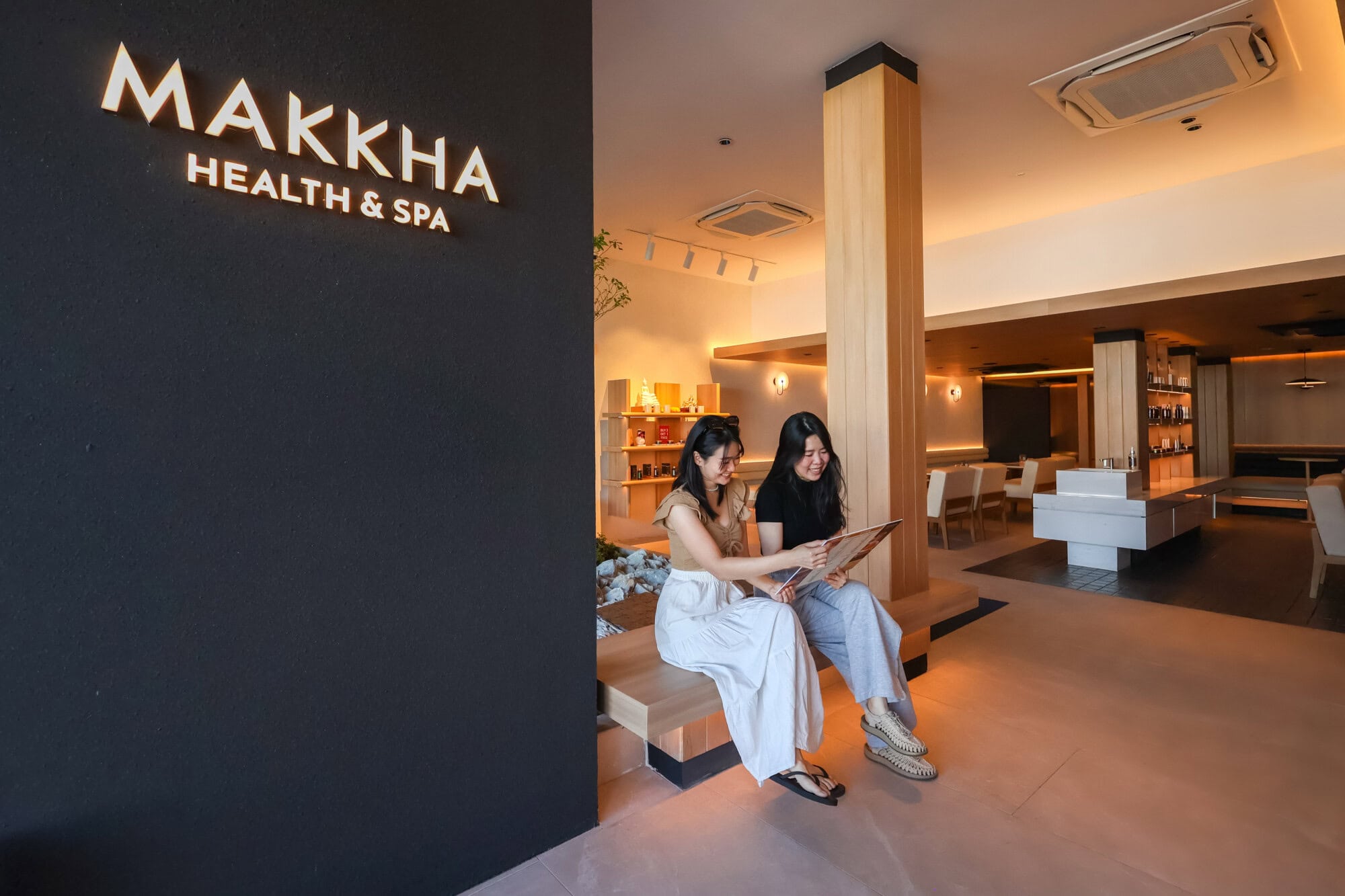
At Makkha Health & Spa, a trusted Thai massage and spa with locations across Thailand’s top destinations, our therapists are trained in both styles and can guide you toward the treatment that best suits your condition, preferences, and wellness goals.
What Is Thai Massage?
Thai massage, known in Thailand as Nuad Bo-Rarn, is a traditional healing practice with roots stretching back over 2,500 years. It is one of four branches of traditional Thai medicine, alongside herbal medicine, nutrition, and spiritual practice. The technique is attributed to Jivaka Kumar Bhaccha, a physician who was a contemporary of the Buddha, and it developed within the context of Buddhist monasteries, where monks sought to relieve physical suffering through bodywork.
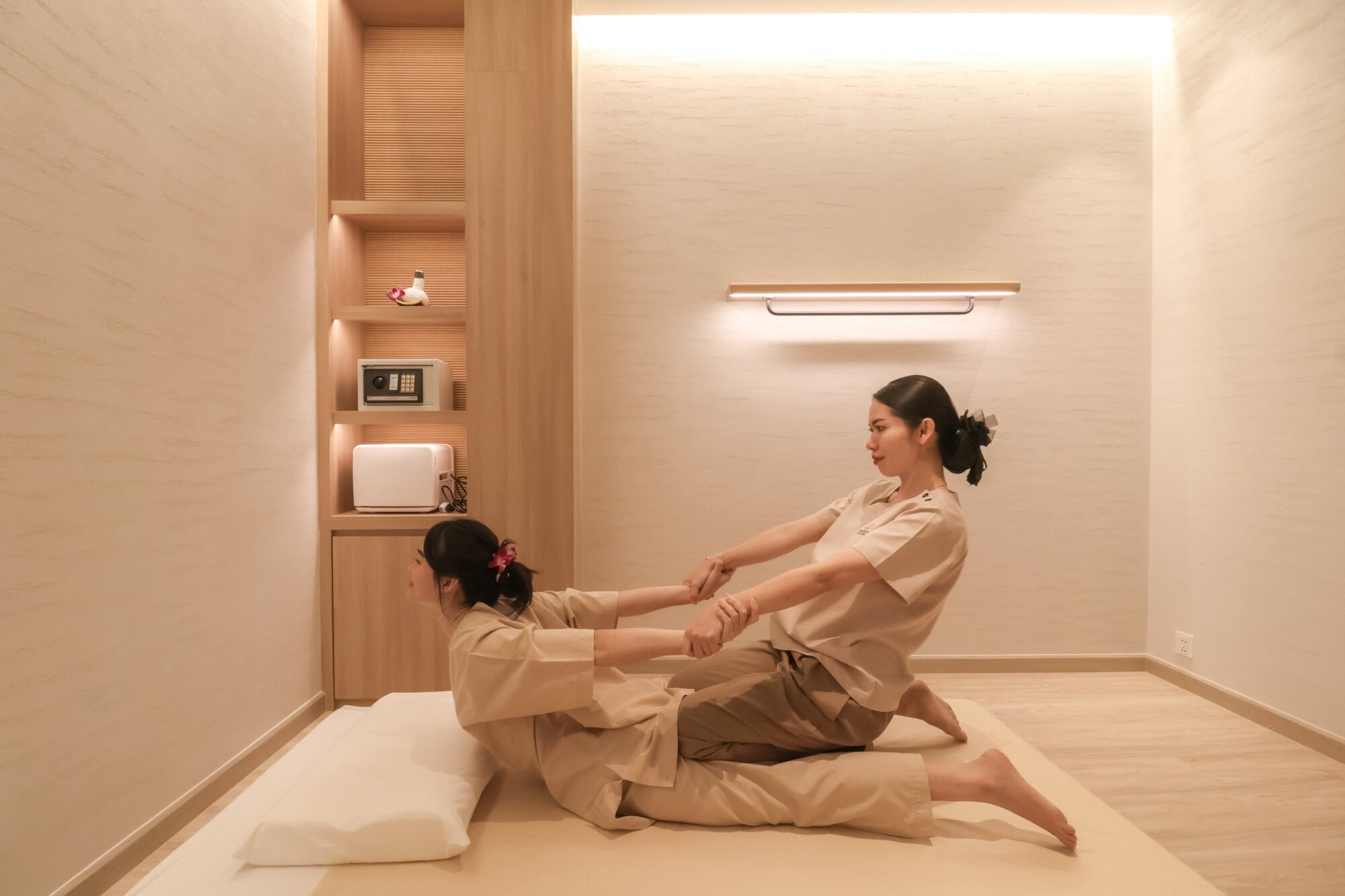
Unlike most Western massage styles, Thai massage is performed fully clothed on a padded floor mat rather than on a raised table. No oils or lotions are used. Instead, the therapist uses their hands, thumbs, elbows, knees, and feet to apply rhythmic pressure along the body’s energy lines, known in Thai medicine as “sen.” These ten primary energy pathways are believed to carry vital life force throughout the body, and applying pressure along them is thought to release blockages and restore balance.
What truly sets Thai massage apart is its incorporation of assisted stretching. Throughout the session, the therapist guides your body through a series of yoga-like positions, gently opening the joints, lengthening the muscles, and improving the range of motion. The experience is active and dynamic rather than passive, and many people describe it as feeling like they have had a full stretch session and a massage at the same time.
Benefits of Thai Massage
Thai massage offers a wide range of benefits that extend beyond simple muscle relaxation. Regular sessions can improve flexibility and joint mobility, particularly in the hips, shoulders, and spine. The stretching movements help correct postural imbalances caused by prolonged sitting, while the rhythmic compression along the sen lines supports circulation and promotes a sense of energetic balance. Research published in the Journal of Physical Therapy Science has also shown that Thai massage can reduce back pain and improve functional movement in people with chronic musculoskeletal discomfort.
Many clients report feeling lighter, more alert, and more physically open after a Thai massage session, which is why it is often recommended as a restorative practice rather than a purely relaxation-focused one.
What Is Deep Tissue Massage?
Deep tissue massage, a Western therapeutic approach, targets the deeper muscle and fascia layers. It is made to target long-term tension, stubborn knots, and tight spots that don’t improve with gentle pressure.
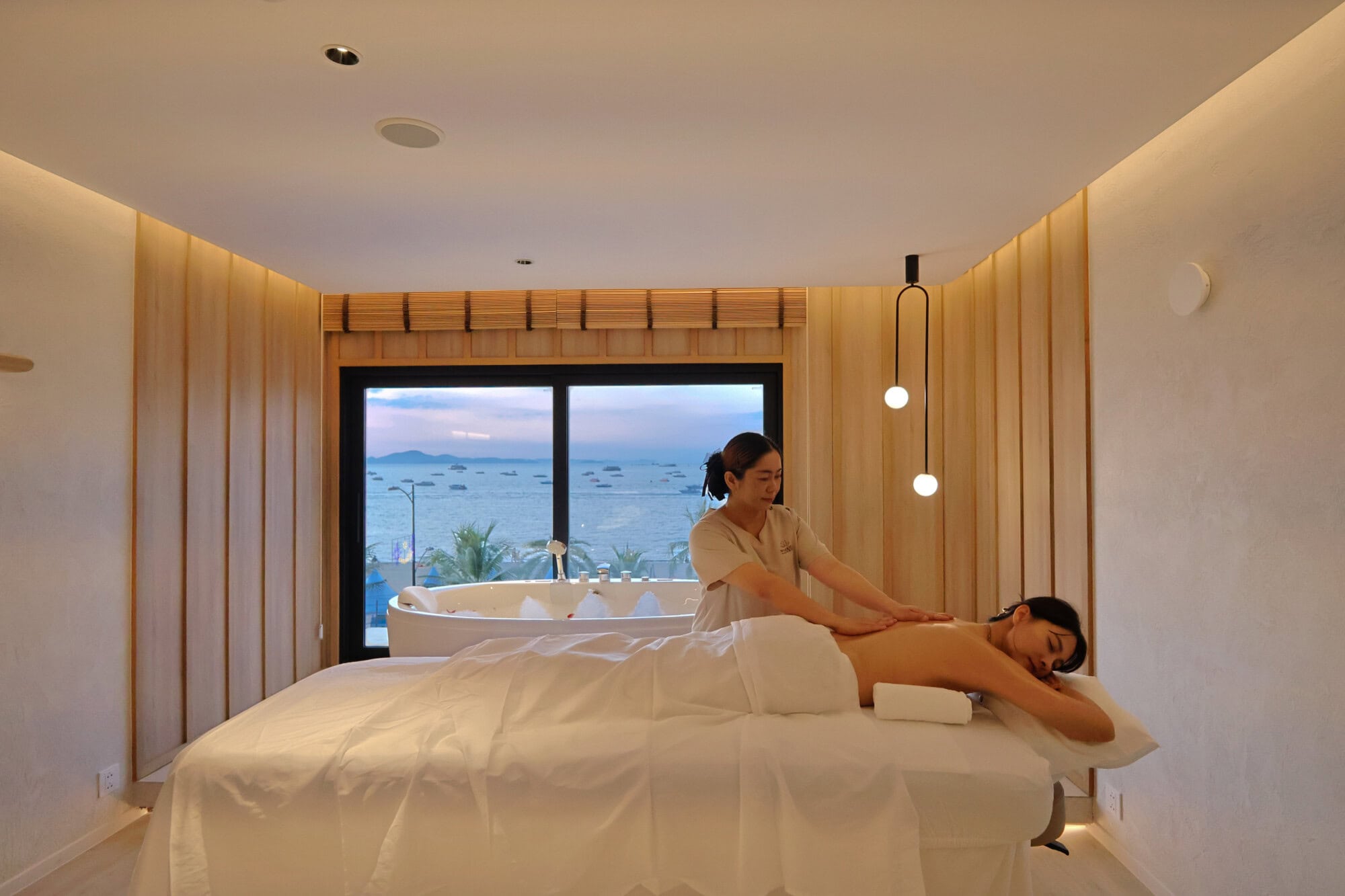
In deep tissue massage, the therapist applies slow, intentional movements and consistent pressure to address muscle adhesions and limitations. Standard techniques involve long, deep strokes over the entire muscle, friction applied against the muscle fibers to address scar tissue, and targeted pressure on tight muscle spots. A standard massage table is used for the massage, and oil is typically applied to the skin to help the therapist’s hands glide and reach deeper tissues.
Deep tissue massage targets particular trouble spots, not the entire body. Your therapist will focus heavily on your tight shoulders, stiff lower back, or hip pain from running, applying targeted, concentrated techniques to those areas.
Benefits of Deep Tissue Massage
The primary strength of deep tissue massage is its ability to address chronic pain and deeply held tension. It is particularly effective for conditions such as lower back stiffness, neck and shoulder tightness from desk work, tension headaches, and muscle soreness from exercise or repetitive movement. The sustained pressure helps break down adhesions in the fascia and realign muscle fibers, which can lead to improved range of motion and reduced pain over time. Deep tissue work also promotes circulation to the targeted areas, helping flush out inflammatory byproducts and deliver fresh oxygen to tissues that need repair. For athletes and physically active individuals, it is a valuable recovery tool that can shorten healing time and prevent minor tightness from developing into more serious injuries.Key Differences Between Thai Massage and Deep Tissue Massage
When comparing Thai massage vs deep tissue, several important distinctions become clear across technique, setting, pressure style, and overall purpose.
Technique
Thai massage combines assisted stretching, rhythmic compression, and acupressure along the body’s energy lines. The therapist uses their entire body, including hands, elbows, knees, and feet, to guide you through a series of movements and apply pressure. Deep tissue massage relies on slow, targeted strokes and sustained pressure applied primarily with the hands, forearms, and elbows to work through deep muscle layers and fascia
Body Positioning and Setting
Thai massage is performed on a padded floor mat, and the client wears loose, comfortable clothing throughout the session. The therapist moves around and repositions the client frequently, working through multiple positions, including supine, prone, and side-lying. Deep tissue massage is performed on a raised massage table, with the client undressed to their comfort level and draped with a sheet. The client typically remains in one or two positions while the therapist focuses on specific areas.
Pressure Style
The pressure in Thai massage is rhythmic, dynamic, and constantly moving. It flows through the body in waves, alternating between compression and release. Deep tissue pressure is sustained, concentrated, and directed at specific layers of muscle. It stays in one area longer and penetrates more deeply before moving on.
Overall Goal
Thai massage is designed to improve flexibility, restore energy flow, support joint mobility, and create full-body balance. Deep tissue massage is designed to release chronic tension, break down adhesions, and provide targeted pain relief in specific muscle groups.
Sensation During Treatment
Thai massage feels active and invigorating. You may feel deep stretches, joint openings, and a flowing rhythm of pressure that leaves you feeling energized and open. Deep tissue massage can feel intense and therapeutic, particularly when the therapist works through stubborn knots. Some discomfort is normal during deep tissue work, though it should always remain within a tolerable range. After the session, most people experience significant relief in the targeted areas.
Which Massage Is Right for You?
Choosing between Thai massage and deep tissue massage comes down to understanding what your body needs most at this point in time.
- Thai massage may be the better choice if you want to improve your overall flexibility and range of motion, spend long hours sitting at a desk and feel generally stiff throughout your body, prefer a full-body treatment that addresses posture and energy balance, enjoy active, movement-based bodywork, or want a treatment that leaves you feeling refreshed and energized rather than deeply sedated.
- Deep tissue massage may be the better choice if you are dealing with chronic pain in a specific area such as the neck, shoulders, or lower back, have muscle tightness or knots that do not respond to lighter massage styles, are recovering from a sports injury or physical strain, experience tension headaches linked to tight neck and shoulder muscles, or prefer a focused, targeted approach to a particular problem.
It is also worth noting that these two styles are not mutually exclusive. Many people benefit from incorporating both into their wellness routine, using Thai massage for regular maintenance and full-body balance, and booking deep tissue sessions when specific tension or pain needs attention. Your lifestyle, activity level, and personal comfort with pressure should all factor into your decision.
Experience Both at Makkha Health & Spa
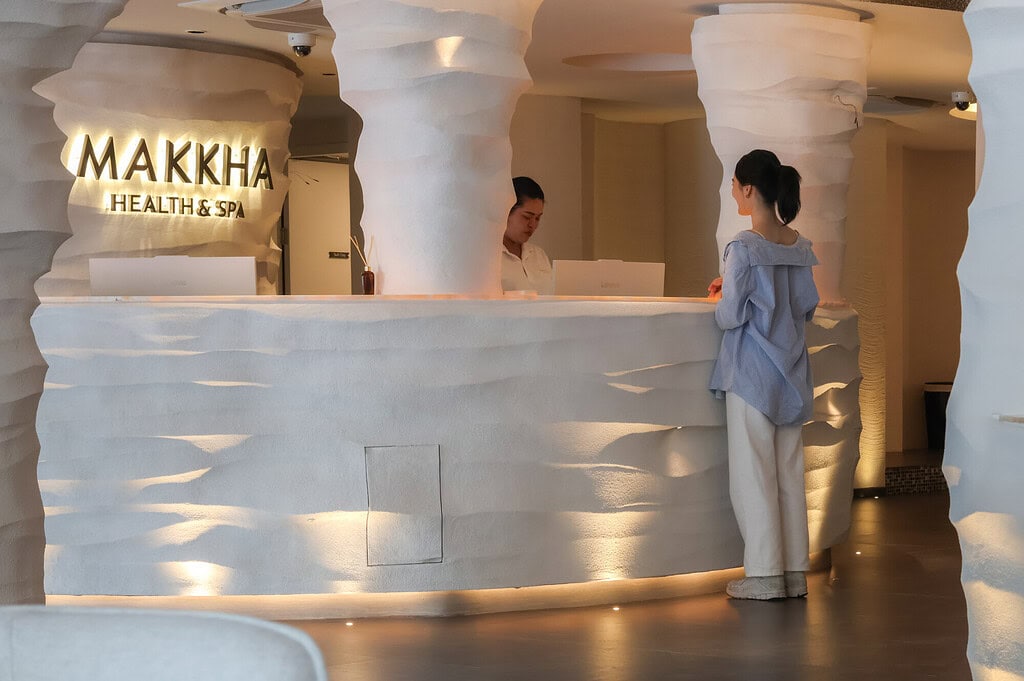
At Makkha Health & Spa, we offer both authentic Thai massage and professional deep tissue treatments performed by highly trained therapists who understand the distinct techniques and benefits of each style. Whether you are drawn to the stretching and energy work of Thai massage or the focused relief of deep tissue, our team can tailor every session to your body’s needs.
Every visit begins with a personal consultation. Before your treatment starts, your therapist will ask about your areas of tension, any injuries or conditions to be aware of, and what you hope to achieve from the session. This conversation ensures that you receive a treatment that is safe, effective, and aligned with your goals, whether that means a full-body Thai massage for flexibility or a concentrated deep tissue session for a persistent knot in your shoulders.
Our spa environment is designed for complete relaxation. Each treatment takes place in a comfortable, private room, and all our sessions use 100% natural products from our own WAN WAAN brand, formulated to be gentle on sensitive skin. When your massage is complete, we welcome you with complimentary bael fruit juice and rice crackers before the session and serve our signature mango sticky rice afterward, a small but meaningful touch that rounds out the wellness experience.
If you are unsure which massage is right for you, simply ask. Our therapists are happy to recommend the best approach based on your condition and preferences.
Visit Makkha Health & Spa at our locations in Bangkok, Chiang Mai, Pattaya, and Phuket. We are open daily from 10:00 AM to midnight.
References
- National Center for Complementary and Integrative Health. Retrieved on 20 February, 2026 from https://www.nccih.nih.gov/health/massage-therapy-what-you-need-to-know
- Complementary Therapies in Clinical Practice. Retrieved on 20 February, 2026 from https://pubmed.ncbi.nlm.nih.gov/25172313/
常见问题解答
Q: What is the main difference between Thai massage and deep tissue massage?
A: The main difference is in how the two techniques work on the body. Thai massage uses assisted stretching, rhythmic compression, and acupressure along the body’s energy lines to improve flexibility and promote full-body balance. It is performed fully clothed on a floor mat. Deep tissue massage uses slow, sustained pressure to reach deeper layers of muscle and connective tissue, targeting specific areas of chronic tension. It is performed with oil on a massage table and focuses on concentrated problem areas.
Q: Which massage is better for back pain?
A: It depends on the type of back pain you are experiencing. If your back pain is related to general stiffness, poor posture, or limited mobility, Thai massage can be very effective because its stretching techniques help open the spine and improve movement. If your pain is caused by a specific muscle knot, chronic tightness, or a deep-seated adhesion, deep tissue massage is likely the better option because it directly targets the affected tissue. Your therapist at Makkha Health & Spa can help determine which approach is most appropriate for your condition.
Q: Can I get both Thai massage and deep tissue massage in one visit?
A: At Makkha Health & Spa, our therapists can adjust their techniques within a single session based on your needs. If you want elements of both styles, discuss this with your therapist during the pre-session consultation and they will create a customized treatment plan. Many guests find that combining gentle Thai stretching with focused deep tissue work on specific areas gives them the best overall result.